Challenge
Over the years, SG’s youth population has been shrinking while the elderly population had been on the rise. This adds pressure on the youth to support the elderly, straining the perceptions of the elderly.
Nowadays with youths no longer living with their grandparents, limiting youths’ interaction with elderly, creating misunderstanding.
Youth are also slowly viewing Asian Value of filial piety of lesser importance, with more youth willing to forgo taking care of their parents in unfavourable situation
Problem Statement
How might we help youth and elderly build meaningful relationships in an increasingly disconnected society?
Elders and youth struggle to connect with each other due to separated lifestyles and differing styles of communication. Bringing them closer together and fostering meaningful conversations can help bridge this gap.
Key Insight
The problem wasn't a lack of willingness to connect.
Both groups actually desired connection.
Youths wanted guidance, perspective, and stronger relationships with older generations, while many elderly participants expressed a desire to share their experiences and build meaningful relationships with younger people.
However, both groups struggled with:
Different communication styles
Lack of shared opportunities to interact
Social assumptions about each other
Fear of vulnerability during initial conversations
The most important insight was:
People are more willing to share deeply when they feel safe, anonymous, and free from immediate judgement.





The Opportunity
Rather than forcing direct interaction, we saw an opportunity to create a slower and more intentional form of communication.
Research suggested that meaningful conversations could emerge if participants were given:
Time to reflect
A safe environment
A sense of purpose
Freedom from social pressure and stereotypes
This leads to our key design principle:
Create a space where vulnerability can happen before familiarity.

Solution: The Listening Post
A cross-generational message exchange service that connects youths and elderly individuals through anonymous letter exchanges.
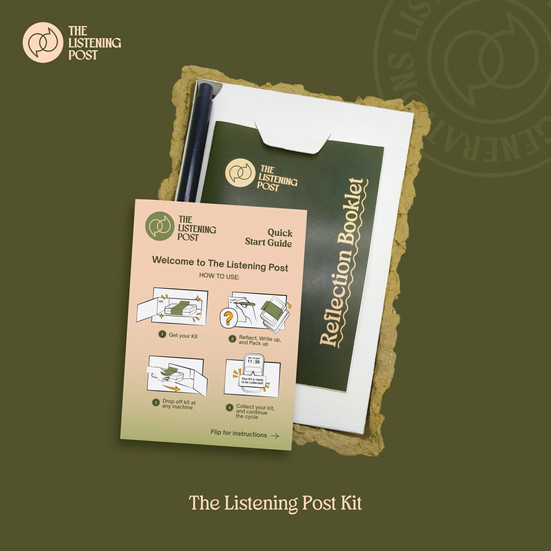
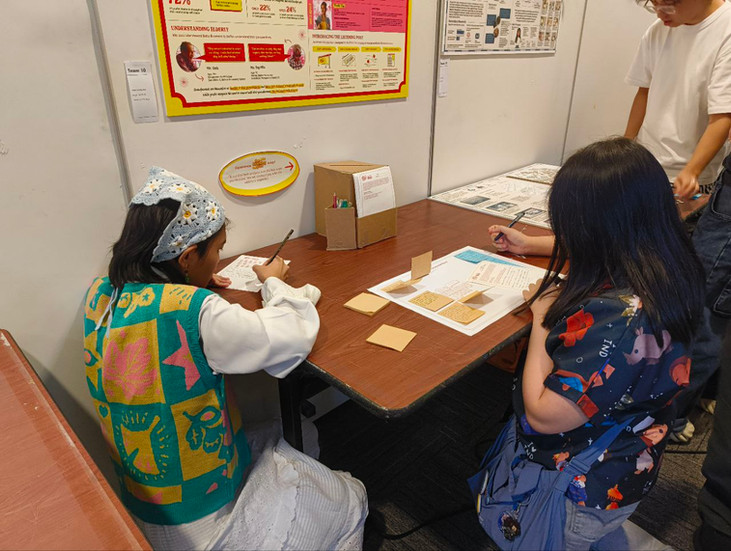
Participants receive a kit containing reflection prompts and writing materials to help them articulate their thoughts and experiences. Messages are exchanged anonymously, allowing both parties to engage honestly without preconceived assumptions.
The service ecosystem consists of:
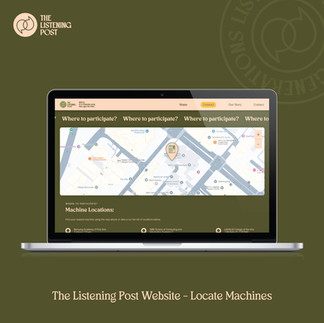
Listening Post machines located at schools and senior centres
Reflection kits
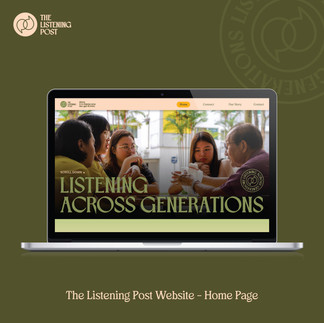
A website archive that shares anonymous exchanges and resources
A structured exchange process that gradually builds trust and understanding
The Listening Post Kit



The Listening Post Machine

The Listening Post Machine Interface

The Listening Post Machine Website






Structured Exchange System


Impact
The solution transforms intergenerational engagement from an intimidating social encounter into a reflective and meaningful experience.
Instead of focusing on conversation as an event, the service focuses on relationship-building as a process.
The project demonstrates how design can:
Foster empathy
Reduce social barriers
Encourage meaningful dialogue
Create a sense of purpose for both generations

Find out more
With this project being my final year project as well as a group project, many areas of research were not touched on here. You can view more details of the project below by checking out the Team's research booklet, my own individual research booklet, as well as our graduation website below:
Group Research Booklet
Individual Research Booklet
Role: Service Designer & Researcher
Responsibilities
Conducted user research and interviews with youths and elderly participants
Synthesised insights into key opportunity areas
Developed service concepts and user journeys
Contributed to service blueprinting and experience design
Participated in prototyping and testing of the service ecosystem
Helped shape the narrative and communication strategy of the project
Skills Demonstrated
User Research
Service Design
Journey Mapping
Stakeholder Engagement
Experience Design
Storytelling






Reflection
This project taught me that meaningful connection cannot be designed through interaction alone.
Initially, I assumed the answer would involve bringing people together physically. However, research revealed that vulnerability, trust, and reflection were more important than proximity.
I learned that sometimes the most impactful design intervention is not increasing communication speed, but creating space for slower and more intentional conversations.
This project reinforced my belief that design can strengthen relationships and create meaningful social impact by helping people feel heard, valued, and understood.